

No immediate danger
A hornet feeding on flowers or hunting is not looking for contact. Check the species: many sightings turn out to be European hornets or wasps.
LeFrelon connects the residents who report hornets, the organisations that lead the control effort in their area and the companies that remove the nests. A non-profit platform, free for local authorities.
Lightest shade: no nest reported on LeFrelon, often because the department is not organised on the platform yet. It does not mean there are no hornets.
Hover over or tap a department, then open its page.
Three situations, three things to do. Whatever happens, never try to destroy a nest yourself.
A hornet feeding on flowers or hunting is not looking for contact. Check the species: many sightings turn out to be European hornets or wasps.
Do not mow or trim nearby. Keep children and pets away, then report the nest: the local team will take it from there.
A sting in the mouth or throat, a swollen face, difficulty breathing, feeling faint: these signs cannot wait. For a single sting, disinfect and keep an eye on it.
As the leaves fall, secondary nests appear at the top of trees. They are still active and producing future queens: removal remains worthwhile as long as the colony is there.
A nest that is empty in winter is never reoccupied. There is no point having it removed after the first frosts.
The life cycle, month by month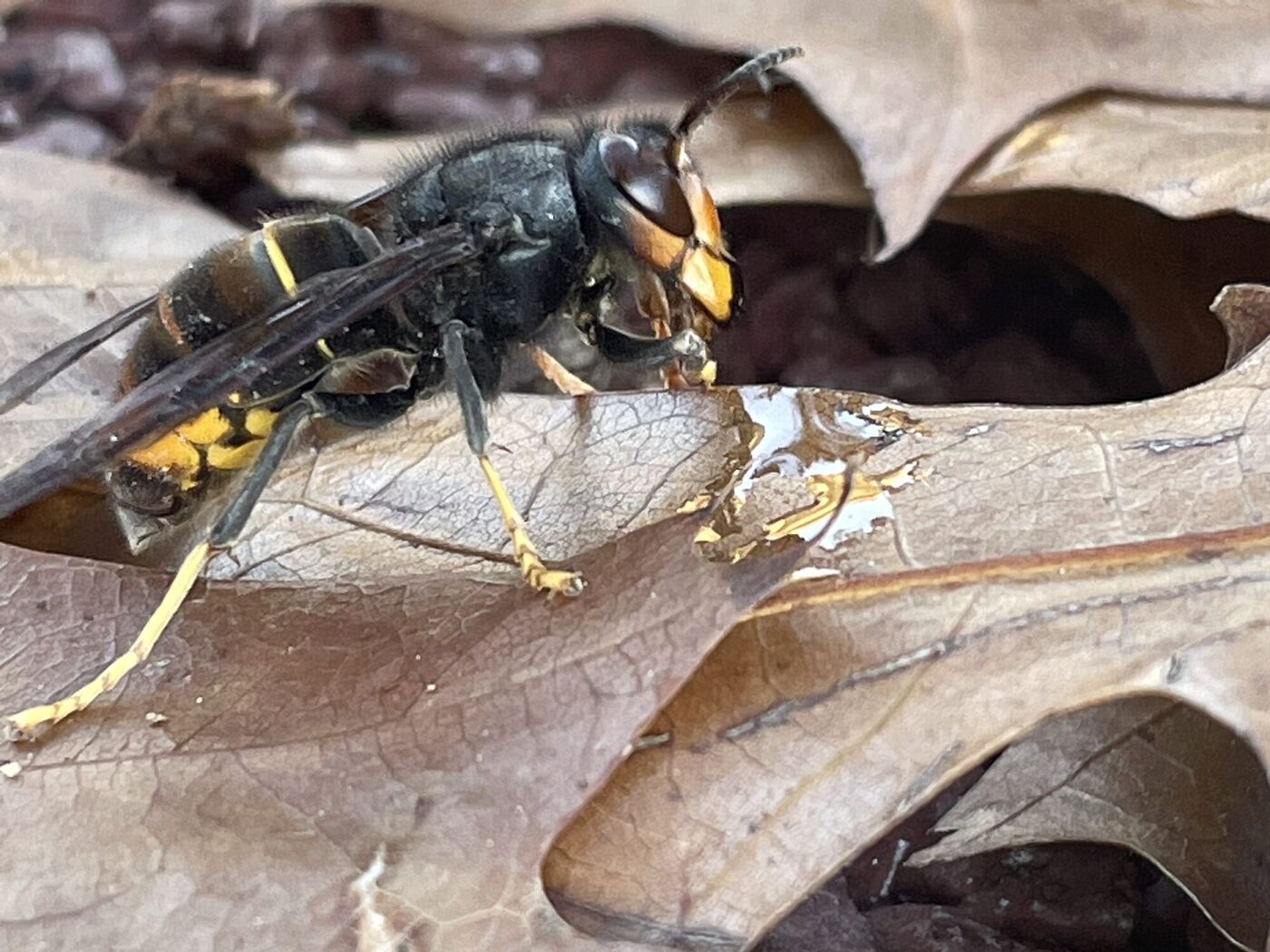
The overview page (in French), and the situation in each department.
Yellow legs, black thorax, a single orange band: the reliable criteria.

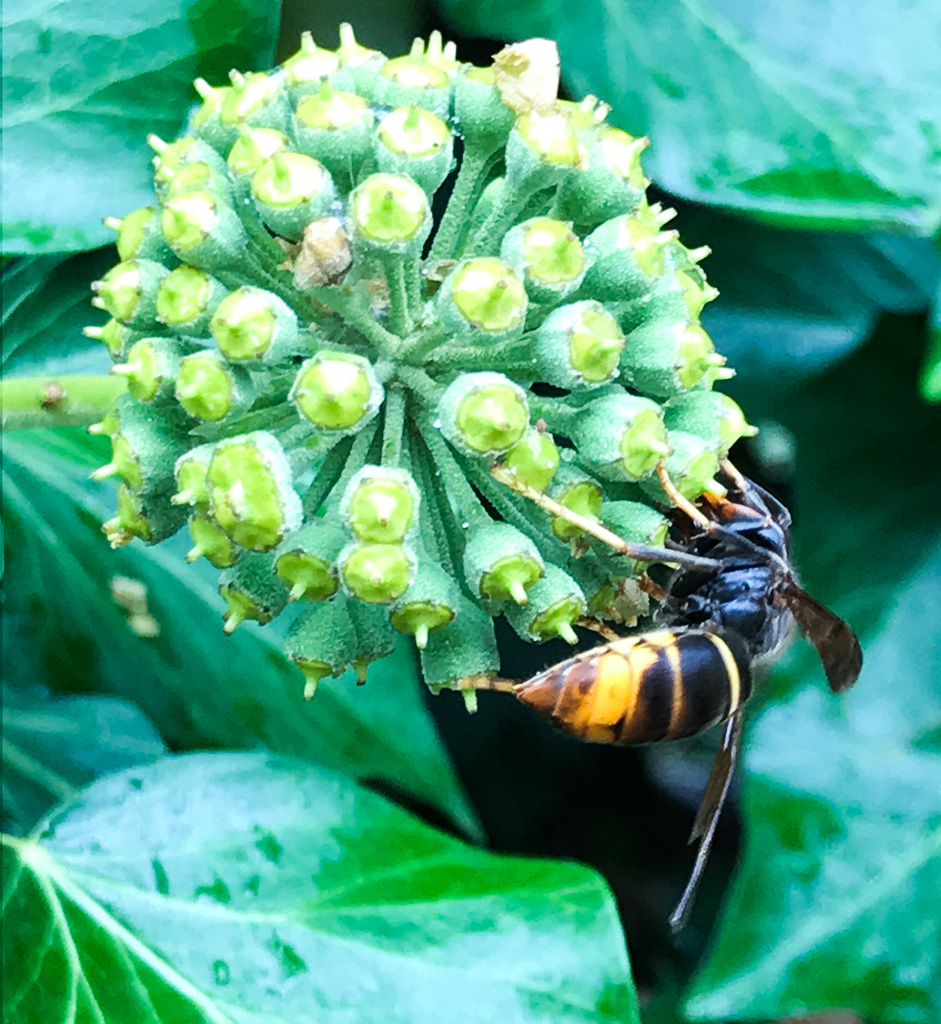
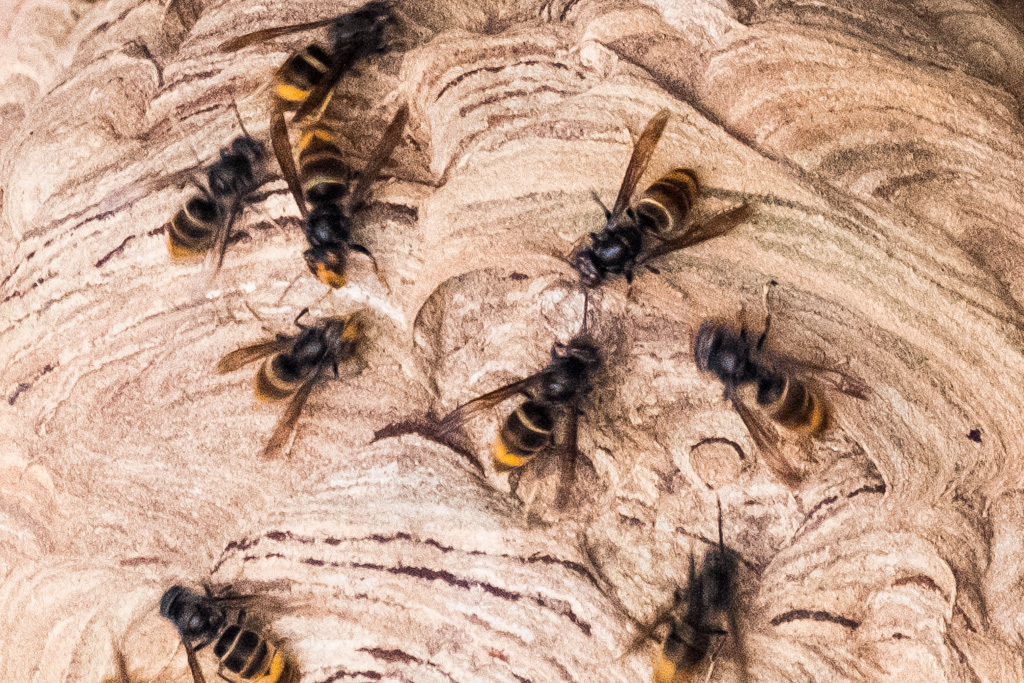
From a lone foundress to a nest of several thousand hornets.
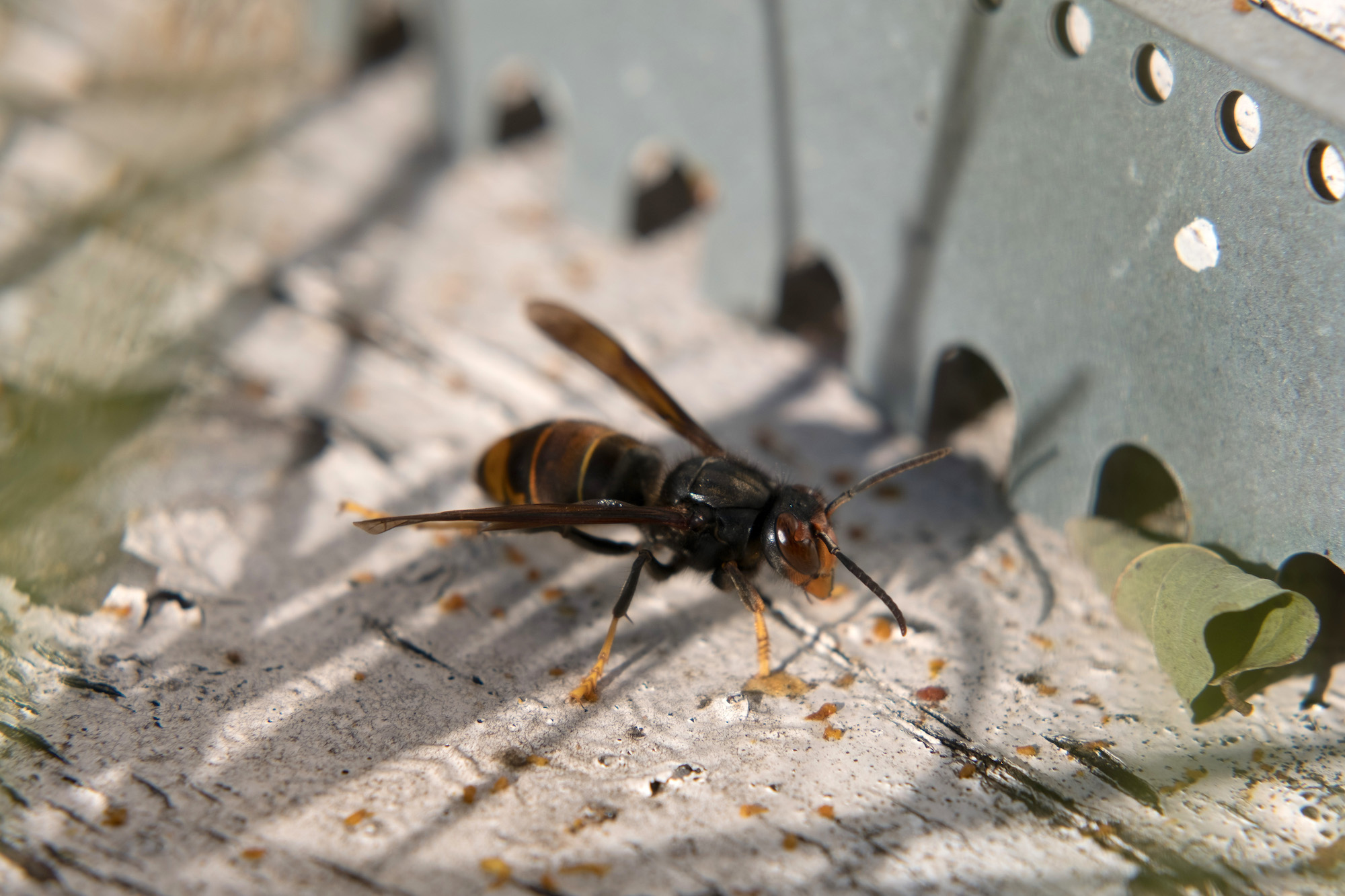
Hive entrance guards, electric harps, selective trapping: what works.
The risk comes from the nest and from allergy: the Anses data, without exaggeration.

Reporting by the mayor, control plans, cost coverage.
Local authorities, beekeepers' health groups (GDSA), FREDON plant-health bodies and pest control companies work on the same reports, each with their own rights, from the first call to the end-of-season review.
Beekeepers' health groups, FREDON bodies, local authorities: each organisation keeps its own page and contacts on the platform.
 Partner authority · Ardèche
La Communauté de communes du Val de Ligne regroupe 11 communes du sud de l'Ardèche, dont Largentière, son siège, Chassiers,...
Le Groupement de Défense Sanitaire Apicole du Doubs (GDSA 25) accompagne les apiculteurs du département dans le suivi sanitaire de leurs...
Le Groupement de Défense Sanitaire Apicole du Bas-Rhin (GDSA 67) est une association de droit local alsacien créée en 1968, dont le siège...